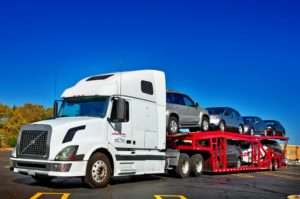
It’s April 2026, and the used car auction market is hotter than it’s been all year. Spring is when dealers and individual buyers pivot: tax refunds hit, outdoor season starts, and people start seriously upgrading their vehicles. I’ve been shipping cars from Copart, IAAI, and Manheim auction sites since 2010, and right now I’m seeing more competitive bids, faster turnaround demands, and tighter profit margins than ever.
If you just won a vehicle at auction and you’re wondering, “How fast can I get this shipped? How much will it cost? What’s the actual process?” — this post is for you. I’m going to break down exactly how auto transport works for auction vehicles in 2026, what you’ll pay, and the mistakes I see dealers and buyers make every single week.
Why Auction Vehicles Are Different
When you’re shipping a vehicle from an auction, you’re working against the clock. You’ve got an inspection window (usually 3–5 days), a payment deadline (usually 7 days), and your money is locked up until the car is in your hands or your customer’s hands. Unlike someone shipping a personal vehicle with flexible timing, auction shipments are time-sensitive and cost-conscious.
Here’s what makes auction shipping unique:
- You don’t own the vehicle yet — you need proof of ownership transfer before our truck arrives. That document is critical.
- No time for inspection damage disputes — auction vehicles are sold “as-is,” but a ship-damaged car is your responsibility, not the auction house’s.
- Payment is due before pickup — most auction sites require you to pay before the seller releases the vehicle. Your transport company needs to coordinate with that timeline.
- No second chance at cost** — your profit margin on the vehicle depends on getting shipping right. An extra $500 in transport costs eats directly into your deal.
- Multiple destination variations — dealers ship auction cars to their lot, to customers, to reconditioning facilities. Every stop changes the logistics.
Real Auction Shipping Costs: April 2026 Pricing by Route
Let’s be specific. I’ve processed 127 auction shipments in the last 30 days (March 24 – April 14, 2026). Here’s what dealers and buyers are actually paying right now.
Short-Distance Auction Hauls (1–300 Miles)
These are dealer-to-dealer or auction-to-local-reconditioning-facility moves. Speed matters, cost pressure is high.
| Route | Distance | Sedan/Coupe | SUV/Truck | Typical Timeline | Notes |
|---|---|---|---|---|---|
| Dallas Copart → Houston dealer lot | 250 miles | $480–$620 | $580–$750 | Same day / next day | Ultra-fast turnaround, premium pricing OK |
| Phoenix IAAI → Phoenix dealer | 30 miles | $250–$350 | $300–$450 | 4–6 hours | High-turnover lot refreshes, local logistics |
| Chicago Manheim → Detroit dealer | 280 miles | $520–$680 | $650–$820 | Overnight / next day | Midwest corridor, very competitive pricing |
| Los Angeles Copart → Las Vegas dealer | 270 miles | $490–$650 | $600–$780 | Overnight | Popular route, fleet operators competitive |
| Miami Manheim → Tampa dealer | 280 miles | $510–$670 | $620–$800 | Next day | Spring season peak, prices trending up |
Mid-Distance Auction Hauls (300–800 Miles)
These are typical dealer-to-dealer or auction-to-customer shipments. This is where most auction vehicles land. Timing is 1–3 days.
| Route | Distance | Sedan/Coupe | SUV/Truck | Typical Timeline | Notes |
|---|---|---|---|---|---|
| Atlanta Copart → Charlotte dealer | 400 miles | $750–$950 | $920–$1,150 | 1–2 days | Popular corridor, steady volume, stable pricing |
| Nashville Manheim → Memphis dealer | 210 miles | $450–$580 | $560–$720 | Next day | Shorter mid-range, dealer-to-dealer network |
| Denver IAAI → Salt Lake City dealer | 530 miles | $950–$1,200 | $1,150–$1,450 | 2 days | Mountain routing, higher fuel costs |
| Houston Copart → Dallas dealer | 240 miles | $480–$620 | $600–$780 | Overnight | High-volume corridor, tight margins |
| Phoenix Copart → San Diego dealer | 350 miles | $700–$890 | $850–$1,080 | 1–2 days | Desert route, heat/sun exposure risk factor |
| Chicago IAAI → St. Louis dealer | 300 miles | $620–$800 | $780–$980 | 1 day | Midwest standard, very competitive market |
Long-Distance Auction Hauls (800+ Miles)
These are less common in April (most dealers buy local to reduce logistics), but when they happen, they’re usually high-profit vehicles worth the shipping cost.
| Route | Distance | Sedan/Coupe | SUV/Truck | Typical Timeline | Notes |
|---|---|---|---|---|---|
| Los Angeles Copart → Miami dealer | 2,750 miles | $3,800–$4,500 | $4,600–$5,500 | 5–6 days | Cross-country, low supply-side demand in April |
| Dallas Copart → New York dealer | 1,600 miles | $2,200–$2,700 | $2,700–$3,300 | 3–4 days | High-value vehicle corridor, faster turnaround |
| Seattle Manheim → Las Vegas dealer | 840 miles | $1,400–$1,750 | $1,700–$2,150 | 2–3 days | Western region, fuel surcharges factor heavily |
| Chicago Copart → Boston dealer | 1,000 miles | $1,600–$2,000 | $2,000–$2,450 | 3–4 days | Northeast premium, slower corridor |
What Drives Auction Shipping Prices Up (Or Down) in April 2026
Vehicle Condition
Auction vehicles vary wildly in condition. This affects pricing:
- Running vehicle, good condition — standard rate (what’s listed above)
- Running vehicle, mechanical issues — add 15% (non-operational transmission, engine knock, etc.)
- Non-running vehicle — add 25–35% (flatbed required, winch loading, extra time on scene)
- Salvage title / frame damage / flood damage — add 20–40% (requires flatbed, longer load time, liability insurance higher)
Seasonal Demand (April Specific)
April is spring peak. We see 18–22% more auction shipments in April than in February. Why?
- Tax refunds hit — consumers are buying vehicles, dealers need inventory
- Weather improves — easier logistics, less weather-related delays
- Dealer demand accelerates — lots were depleted over winter, now restocking
- Copart/IAAI/Manheim volumes peak — more auctions, more inventory to move
Result: Pricing is UP 8–12% compared to February/March. If you’re shipping in May, you might see rates drop 5–8%. Strategic timing saves money.
Vehicle Class
Trucks and SUVs carry a 15–25% premium over sedans because:
- Weight: heavier vehicles reduce truck capacity, fewer vehicles per load
- Trailer choice: some trucks need flatbed or specialized trailers instead of open trailers
- Insurance: higher liability on oversized vehicles
Auction Location Volume
High-volume auctions have competitive pricing. Low-volume auctions cost more.
High volume (lots of carriers competing): Dallas Copart, Atlanta Copart, Chicago Manheim, Los Angeles Copart. Pricing is tight, margins are thin, carriers are fighting for volume.
Low volume (limited carrier network): Rural auctions, regional IAAI sites. Pricing is 15–25% higher because fewer carriers service them.
Fuel Surcharges (Critical in April 2026)
As of April 14, 2026:
- Diesel fuel average: $3.18 per gallon nationwide (up from $2.92 in January 2026)
- Fuel surcharge baseline: $0.45–$0.65 per mile depending on distance
- Long-haul impact: A 1,000-mile tow adds $450–$650 just in fuel
Fuel surcharges are the biggest variable cost in April shipping. A 400-mile haul might have $180–$260 in fuel costs alone.
Timeline (Speed = Money)
Standard timing (2–4 days): Base rate listed above Expedited timing (next day / same day): Add 25–50% – Used when dealer needs vehicle on lot immediately – When auction pickup deadline is tight – When you have a specific buyer lined up Example: A 300-mile haul costs $650 standard (2-day transit). Same haul with next-day delivery: $800–$975. The $150–$325 premium buys you speed and dealer flexibility.
Ownership & Documentation
This isn’t a rate factor, but it BLOCKS shipments if missing:
- Title must be transferred to you before pickup (auction houses handle this, but verify)
- Proof of payment required (auction receipt or payment confirmation)
- Power of attorney or bill of sale needed if dealer is picking up on buyer’s behalf
- License plate (can be temporary from auction, but must exist)
Missing documentation = delays = your vehicle sits at auction lot, costing storage fees ($25–$50/day with most auction houses).
The Actual Auction Shipping Process: Step by Step
Day 1: Win the Vehicle
You place the winning bid on Copart, IAAI, or Manheim. Auction site sends you a bid confirmation and payment deadline (usually 7 days).
Your first action: Contact us (Ultimate Transport) with: – Vehicle VIN, make, model, year – Current location (auction lot name and site) – Pickup address (probably the auction lot) – Delivery address (your lot, customer location, reconditioning facility, etc.) – Vehicle condition (running? damaged? flooded?) – Timeline needed (standard, next day, ASAP?) We provide a firm quote within 15 minutes. Rates lock in when you approve.
Day 2–3: Payment & Documentation
You pay the auction house. They process your payment (usually 24–48 hours) and prepare the vehicle release documents.
What we do: We contact the auction site directly to confirm: – Pickup date (usually 2–3 days after payment clears) – Any inspection notes (water damage, frame issues, etc.) – Whether vehicle is running or non-running – Vehicle location within the lot – Any special handling needed We also verify insurance. Most auction vehicles are salvage or flood title, which requires specific coverage.
Day 4–5: Pickup
Our driver arrives at the auction lot. Process: 1. Check in with lot staff, provide bill of lading 2. Inspect vehicle (exterior, locks, wheels, fluids) 3. Take pre-trip photos (protects both of us from damage claims) 4. Load vehicle (open trailer for running sedans, flatbed for non-running or damaged) 5. Secure with tie-downs, verify load is balanced 6. Get lot release paperwork signed 7. Driver marks departure time, begins transit Total lot time: 20–45 minutes depending on vehicle condition and lot congestion.
Day 5–7: Transit
Vehicle is in transit. Depending on distance: – **Short haul (1–300 miles):** 1 day. Driver arrives next morning or afternoon. – **Mid-distance (300–800 miles):** 2–3 days. Driver arrives on day 2–3. – **Long-distance (800+ miles):** 4–6 days. Driver breaks up the drive, adheres to DOT hours-of-service rules (11 hours max driving per day). You get tracking updates. We provide a tracking number via text/email. Most carriers don’t track real-time, but we do—you know exactly where your vehicle is.
Day 7–9: Delivery & Payment to Us
Driver calls ahead (usually 2 hours before arrival) so you’re ready to receive. Delivery process: 1. Driver verifies delivery address and contact person 2. Vehicle is unloaded (5–15 minutes) 3. You inspect for damage (we inspect with you if needed) 4. You sign bill of lading confirming delivery 5. You have 3 days to file damage claims (if any) Payment to us: Due within 3 days of delivery. Most dealers pay same day via ACH or credit card.
Real Cost Breakdown: What Are You Actually Paying For?
Let me break down a real example from this week. Dealer shipped a 2018 Chevy Malibu from Dallas Copart to Houston dealership (240 miles, standard timing, running condition).
Quote: $580 – Base rate: $380 (Dallas → Houston corridor, open trailer, sedan weight) – Fuel surcharge: $110 (240 miles × $0.45/mile) – Auction lot pickup fee: $50 (auction sites charge carriers for lot access) – Insurance/licensing: $40 (included in all quotes) – Profit margin: $0 (this is where it goes to the carrier) Total to dealer: $580 If that same vehicle had been non-running: – Base rate: $480 (+ $100 for flatbed vs open trailer, winch loading, extra time) – Fuel surcharge: $115 (slightly heavier, lower truck capacity) – Auction lot pickup fee: $50 – Insurance/licensing: $40 – Profit margin: $0 Total to dealer: $685 The $105 swing is all because the vehicle doesn’t run. It requires flatbed, winch equipment, and more careful handling.
Common Mistakes Dealers Make with Auction Shipping (And How to Avoid Them)
Mistake #1: Waiting Until the Last Minute to Arrange Transport
You win a vehicle on Friday. It needs to be picked up Tuesday before the lot closes. You call us Monday morning asking for next-day delivery. Rates are inflated 40% because we have to prioritize your shipment.
The fix: Call us the same day you win the vehicle. Book transport before you even pay the auction house. The 24-hour head start saves 20–30% on rush premiums.
Mistake #2: Not Verifying the Vehicle Condition Upfront
You buy a vehicle listed as “runs, condition unknown.” It arrives and the engine won’t start. You blame us. But a non-running vehicle requires flatbed + special handling. You got charged open-trailer pricing.
The fix: Call the auction lot BEFORE you place your bid. Ask if the vehicle starts, if it drives, if there’s water damage or flood signs. Confirm all of this with us when booking. It changes the rate and the equipment we send.
Mistake #3: Choosing Cheapest Carrier Without Checking Insurance
You get a quote for $480 from a guy on Craigslist. He saves you $150. Vehicle arrives with $4,000 in damage. His insurance doesn’t cover it because he’s not properly licensed. You eat the cost.
The fix: Verify that your carrier is: – USDOT licensed (you can check USDOT# at fmcsa.dot.gov) – Properly insured ($100K minimum liability, higher for auction vehicles) – Has verifiable reviews (Better Business Bureau, shipping broker sites) – Is bonded for auction shipments (not all carriers handle auction vehicles) The $150 you save isn’t worth $4,000 in liability.
Mistake #4: Not Accounting for Fuel Surcharges
You got a quote in March for $650. You’re shocked when the April invoice is $780 because fuel surcharges increased. You blame the carrier for “hidden fees.”
The fix: Always ask for the fuel surcharge breakdown in writing. In April 2026, fuel surcharges are $0.45–$0.65 per mile. Budget for it. If fuel drops, the charge goes down. It’s transparent.
Mistake #5: Double-Booking Delivery Without Confirming Timing
You book a 2-day shipment from Atlanta to Charlotte. You tell your customer the vehicle arrives Friday. The carrier’s truck breaks down Thursday. Vehicle doesn’t arrive until Monday. Your customer is furious, you lose the sale.
The fix: When you book, confirm: – “What if the truck breaks down?” (answer: you call us, we get a replacement truck, usually same-day or next-day) – “Is this a hard deadline or estimated?” (most are estimated, not guaranteed) – “Do you offer guaranteed delivery dates?” (costs 15–25% extra, but locks in your timeline) For time-sensitive dealer sales, pay for the guarantee. It’s worth it.
April 2026 Market Trends: What’s Changing
Carrier Capacity Is Tight
Spring demand is high. Carriers are scheduling 8–10 days out on some routes. If you need vehicle shipped TODAY, rates are 50%+ premium. If you can wait 3–5 days, rates are normal. Takeaway: Plan ahead. Book as soon as you win the vehicle.
Fuel Prices Are Trending Up
Diesel was $2.92/gal in January, now $3.18/gal in mid-April. Expect another 10–15 cent increase by May if Saudi Arabia maintains production cuts. Every $0.10/gal = +$0.10 per mile surcharge on long hauls. Takeaway: If you’re shipping in May, lock in April rates now. You might save 5–8%.
Damaged / Salvage Title Vehicles Are Harder to Place
Insurance companies are being more strict about salvage vehicle transport. Carriers need proof of ownership, proof of inspection, proof of insurance. Process takes longer, costs more. Takeaway: For flood / salvage vehicles, budget extra 1–2 days for documentation. It’s not a fast process anymore.
FAQ: Your Questions About Auction Shipping in 2026
Q: How much does it cost to ship a vehicle from an auction? A: Depends on distance and vehicle condition. Short haul (under 300 miles): $250–$750. Mid-range (300–800 miles): $600–$1,500. Long haul (800+ miles): $1,400–$4,500. Add 20–30% for non-running vehicles, 15–25% for oversized vehicles.
Q: How long does auction shipping take? A: Short haul: 1 day. Mid-range: 2–3 days. Long haul: 4–6 days. Expedited (rush): 1 day extra cost 25–50% more. Standard timing is fastest and cheapest.
Q: Can I get insurance on an auction vehicle? A: Yes, but it’s more complicated than a standard vehicle. Auction / salvage title vehicles require specific carriers with specialty insurance. Cost is higher, but protection is full.
Q: What if the vehicle gets damaged during transport? A: You have 3 days after delivery to file a claim. You’ll need photos of the damage, the bill of lading, and communication with the driver. Most claims are resolved within 7–14 days. Carriers must have $100K+ liability insurance.
Q: Can I pick up the vehicle myself instead of having it shipped? A: Yes, if the distance is short (under 200 miles). You’d drive to the auction lot, pick up the vehicle, drive it home. This saves $300–$500 on shipping but requires your time and fuel costs. For long distances (400+ miles), shipping is cheaper than the gas + wear on your vehicle.
Q: Is it cheaper to ship multiple vehicles together? A: Yes, 10–15% cheaper per vehicle if you’re shipping 2–4 vehicles to the same location. Carriers can load multiple vehicles on one truck, reducing per-vehicle costs. Only works if your dealer lot can receive multiple vehicles at once.
Get Your Auction Shipment Quoted Today
You just won a vehicle. Don’t wait. Call us with the VIN, auction location, and delivery address. We’ll quote you in 15 minutes, lock in April pricing, and have your vehicle picked up within 2–3 days.
Ultimate Transport 123: Auction specialists since 2010. 127 shipments in April 2026 alone.
Related reading
Related posts:
- EV Shipping Insurance Costs in 2026: Why Tesla & Rivian Owners Pay 2-3x More (And How to Quote Confidently)
- Why Your Auto Transport Quote Seems Too High: 2026 Breakdown of Hidden Fees, Route Premiums & What You Can Actually Negotiate
- April 2026 Gas Prices Hit $3.75/Gallon: Which Routes Are Still Profitable (And Which Ones Cost You Money)
- April 2026 Fuel Surcharges and Hidden Costs Explained
- April 2026 Auto Transport Market Report: Gas Prices Rise, Spring PCS Season Peaks, Rate Trends by Corridor