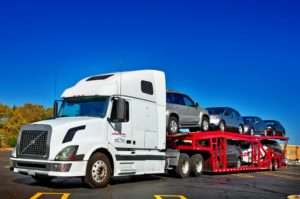
Your auto transport quote just came back at $1,550, and you feel like you got ripped off. But here’s the truth: that quote is probably fair—you just don’t see where the money’s going. As someone who’s shipped 500K+ vehicles, I’m going to walk you through every line item, show you where costs really come from, and tell you exactly what you can negotiate and what you can’t.
The Real Cost Breakdown: Where Your Money Actually Goes
Let me use a real example. Client calls us: “I want to ship my 2022 Honda Accord from Denver to Los Angeles, about 1,000 miles. Can you do it for $600?” Short answer: no. Here’s why.
The Base Rate (What You Think You’re Paying)
$700–$900 for a Denver-to-LA sedan transport on open trailer, spring 2026.
This is the “headline number.” It covers:
- Truck fuel (approximately 180–200 miles round trip for pickup/delivery)
- Driver labor (8–12 hours of driving, waiting, loading, unloading)
- Wear and tear on truck/trailer ($0.50–$0.75 per mile)
- Insurance on that specific load
- Dispatch coordination and customer service
That $700–$900 is already razor-thin margin. Most carriers operate at 10–15% net profit on base rates. A major delay, equipment breakdown, or fuel spike eats that entire profit.
The Fuel Surcharge (April 2026 Reality)
+$150–$250 additional
Your base quote assumes gas at $3.00/gallon. We’re at $3.65/gallon in April 2026. That difference compounds across a 1,000-mile haul:
- Truck fuel consumption: 6 miles per gallon (tractor-trailer average)
- 1,000 miles ÷ 6 mpg = 167 gallons needed
- At $3.00/gal = $501 in fuel
- At $3.65/gal = $609 in fuel
- Difference = $108 per load
But that’s just the direct cost. When fuel spikes, labor costs go up (drivers demand higher pay), insurance premiums tick up, and equipment costs rise. A proper fuel surcharge is $150–$250 per load, not $100. If a carrier isn’t charging a fuel surcharge right now, they’re eating the cost and will go out of business within 6 months.
Can you negotiate this? No. Fuel surcharges are tied to commodity prices. Every carrier charges them.
Peak Season Premium (April 2026 Is Expensive)
+$100–$250 additional (or built into base rate with +15–20% markup)
April is military PCS season. Active-duty orders peak April through June. Every service branch is processing moves simultaneously. Demand for carriers is insane. At Ultimate Transport, we’re turning away 20–30% of requests because we don’t have capacity.
Here’s the economics:
- September: we can load a truck 85% full (5–6 vehicles). Profit per load = $4,500.
- April: we can load the same truck 100% full (7 vehicles). Demand lets us be picky. We add $150–$250 per vehicle. Profit per load = $6,500–$7,200.
That’s not greed. That’s supply and demand. When demand exceeds supply, prices go up. Basic economics. If you book in September, you’ll pay $200–$300 LESS than booking in April for the identical route and vehicle.
Can you negotiate this? Maybe 5–10% off if you’re flexible on dates and willing to accept a 5–7 day pickup window instead of 3 days. Most people won’t wait.
Door-to-Door Service (Convenience Tax)
+$150–$300 additional
Here’s what seems obvious but isn’t: door-to-door delivery costs money. The driver has to navigate residential neighborhoods, deal with parking restrictions, carefully back into driveways, wait while you inspect the vehicle, and sign paperwork. This isn’t on a highway—it’s precision maneuvering in tight spaces.
The alternative: terminal-to-terminal. You drive to a freight terminal (usually 30–60 minutes outside the city), drop your car off, and pick it up at a terminal in your destination city. Terminals have wide-open spaces, professional ground crew, and zero navigation stress.
Terminal service saves you $150–$300. The carrier loves it because they save 2–4 hours per load. The customer usually won’t do it because convenience is worth the extra money.
Can you negotiate this? Yes. Ask for terminal service and save $200 instantly.
Specialized Vehicle Surcharges
Now we’re getting into the fees that genuinely surprise people.
Oversized Permits (Lifted Trucks, Wide Loads)
Your truck sits 4 inches higher than stock. Over-height limit. Now you need an oversized permit in most states. Cost to us: $300–$600 depending on the route. We pass it through: +$300–$600.
Who pays this? The vehicle owner. You chose to lift the truck. We pay the government for the permit on your behalf.
Can you negotiate this? No. It’s a government fee plus documentation. It’s the same for everyone.
Non-Running Vehicle Winching
Your engine seized. We can’t roll it onto the trailer. We need to winch it up. That’s an extra 30–45 minutes of labor, specialized equipment, and risk (what if the vehicle has mechanical issues during loading?). Surcharge: +$200–$400.
Can you negotiate this? No. The vehicle won’t roll. We have to winch it. Simple as that.
All-Wheel Drive Flatbed (AWD Non-Running)
Your AWD Subaru won’t start. We can’t tow it on a standard open trailer because AWD vehicles can’t roll freely on only two wheels without damaging the transmission. We need a flatbed, which costs 30–40% more than open trailer.
Open trailer cost: $1,000. Flatbed cost: $1,300–$1,400. Difference: +$300–$400.
Can you negotiate this? No. It’s a safety and mechanical requirement.
Expedited Pickup (48-Hour Guarantee)
You need your car picked up within 48 hours. Normally, we guarantee a 3–7 day window. To drop everything and guarantee 48 hours, we have to: pull a truck off another route, pay the driver overtime, absorb the coordination cost, and take on risk if the customer cancels. Surcharge: +$200–$600 depending on how tight the timeline is.
Can you negotiate this? Sometimes. If it’s off-peak season (September, January, February), we might do it for +$150–$250. In peak season (April, November–December), nope—+$400–$600 minimum.
—Route-Based Pricing You Don’t Expect
Demand Corridors vs. Supply Deserts
Two identical vehicles, same distance, different routes. Here’s the reality:
- CA to TX (high volume): $950–$1,300 for a sedan on open trailer
- CA to Montana (low volume): $1,400–$1,900 for the same sedan on open trailer, same distance
Why? Because every carrier on Earth has a truck going CA-to-TX on any given day. Competition is fierce. Margins are thin. For CA-to-Montana? Maybe 2–3 carriers even service that route. We can charge more because there’s less competition.
This isn’t manipulation. This is basic supply and demand. Go to a small rural area, and every service costs 20–40% more because service providers are rare.
Can you negotiate this? Not really. If you live somewhere rural, you’ll pay a rural premium. It’s like paying extra for Amazon delivery to Alaska.
Remote Pickup/Delivery Locations
“My driveway is 3 miles down a country road, and the road gets impassable in spring.” Classic rural scenario. The driver has to: navigate a rough private road, potentially get stuck, be prepared to call a wrecker if needed, and invest extra time. Surcharge: +$100–$300 depending on how remote.
Can you negotiate this? No. It’s a real operational challenge.
Multiple Stops (More Than One Pickup or Delivery)
You’re shipping two cars: one from Denver, one from Boulder (30 miles away). Two pickups = extra 1–2 hours of work, two customers, two addresses, two delivery confirmations. This should be +$100–$200 extra, but many people expect the same rate. Surcharge: +$75–$150 per additional location.
Can you negotiate this? Yes, slightly. If you’re moving both cars to the same destination, we can bundle and offer a 10% multi-vehicle discount instead of charging per-stop fees.
—The Fees You CAN Negotiate (And How to Save $200–$500)
1. Deadline Flexibility
Negotiation: “I can wait 5–7 days instead of 3 days. Can you reduce the price by $150?”
We LOVE flexible customers. Flexible dates let us fill trucks more efficiently, combine loads, and run optimal routes. If you give us a 5–7 day window instead of the typical 3–5 day window, we can often discount 10–15% ($100–$200 off).
2. Terminal Service
Negotiation: “Can I do terminal pickup and delivery instead of door-to-door? How much do I save?”
Terminal service saves us 2–4 hours per load. We save on fuel, driver time, and navigation. You should save $150–$300. Many customers don’t realize this option exists.
3. Off-Peak Booking
Negotiation: “Can I book for September instead of April? I need to know the difference in price.”
Seasonal pricing isn’t negotiable (because it’s market-driven), but if you have flexibility, booking September vs. April can save 20–30% ($200–$400 on a $800–$1,200 quote).
4. Multi-Vehicle Shipping
Negotiation: “I’m shipping 3 cars. What’s the per-vehicle rate, and do you offer a bundle discount?”
We offer 15–20% off when you ship 2+ vehicles together. One truck, multiple stops, same route. Huge savings. If you’re relocating a family or liquidating a collection, always ask about multi-vehicle rates.
5. Broker vs. Direct Carrier Pricing
Negotiation: “I got a quote from a broker at $1,200. Can you beat it as a direct carrier?”
Brokers take a 20–30% markup. Direct carriers (like us) operate our own fleet, so we can be 10–15% cheaper on the same route. If a broker quoted $1,200, a direct carrier can often do it for $1,050–$1,100. Always compare broker vs. carrier pricing.
6. Cancellation Waiver Trade-Off
Negotiation: “I’ll book expedited (48-hour pickup), but I need a 48-hour cancellation waiver. Can you discount the expedite fee by 10%?”
Expedited usually costs +$200–$600. But if you’re willing to say “I won’t cancel in the next 48 hours,” we can reduce that to +$150–$400 because your commitment reduces our risk. We’d rather have a firm commitment at lower cost than a high-margin cancellation risk.
—The Fees You CANNOT Negotiate
Fuel Surcharge
Tied to commodity prices. We have zero control. Every carrier charges a fuel surcharge in 2026. If someone quotes you with no surcharge, they’re lying or will bankrupt in 90 days.
Peak Season Premium
If demand exceeds supply by 4:1, prices go up. That’s economics. You can get a small discount (5–10%) for flexibility, but the broad premium is non-negotiable.
Government Permits & Fees
Oversized load permits, wide load passes, hazmat documentation—these are government fees. They’re the same for every carrier. We’re just passing them through.
Vehicle Condition Surcharges
Your car won’t run (winching required): +$200–$400. Your car is damaged and needs flatbed: +$300–$500. These are mechanical realities, not negotiable.
Insurance/Liability Coverage
Some carriers offer basic $100K coverage (cheap). We offer $500K as standard, $1M on request. You can’t negotiate insurance. You either accept what we offer or shop elsewhere.
—2026 Quote Analysis: Real Examples
Example 1: Standard Sedan, Denver to LA
Quote: $950 (April 2026)
- Base rate: $700
- Fuel surcharge: +$175
- Peak season premium (April): +$75
- Total: $950
Negotiation options:
- Book for September instead: save $75 (peak premium disappears) = $875
- Terminal pickup: save $150 = $800
- Both: $725 (24% discount from April door-to-door)
Example 2: Lifted Truck, Denver to LA
Quote: $1,350 (April 2026)
- Base rate: $800 (trucks cost more)
- Fuel surcharge: +$175
- Peak season premium: +$75
- Oversized permit (lifted 6″): +$300
- Total: $1,350
Negotiation options:
- Book for September: save $75 = $1,275
- Terminal service: save $150 = $1,125
- Cannot negotiate: permit fee ($300) because it’s government-required
Example 3: Non-Running AWD, Denver to LA
Quote: $1,650 (April 2026)
- Flatbed base rate: $900 (not open trailer)
- Fuel surcharge: +$200 (flatbed uses more fuel)
- Peak season premium: +$100
- Non-running winching: +$300
- AWD flatbed positioning: +$150
- Total: $1,650
Negotiation options:
- Book for September: save $100 = $1,550
- Cannot negotiate: everything else is vehicle-condition dependent
The Psychology of Pricing: Why Your Quote Feels High
You found a quote online that says “$500 auto transport!” It feels like we’re ripping you off at $950. Here’s the reality:
That $500 Quote Is a Bait-and-Switch
It’s a base rate. No fuel surcharge listed. No peak season premium. No door-to-door. It’s the headline to get your attention. At checkout, suddenly it’s $900–$1,100 because of all the real costs.
Our Quote Is Transparent
We list: base rate, fuel surcharge, any specialty fees, and the final number. You know exactly what you’re paying and why. Some customers see $950 and think we’re expensive. Then they go to the “$500” carrier, get hit with surprise fees at pickup, and call us angry.
Real Market Rates for April 2026
- Open trailer sedan (1,000 miles): $800–$1,200 door-to-door
- Open trailer truck (1,000 miles): $900–$1,350 door-to-door
- Enclosed trailer (1,000 miles): $1,400–$1,800 door-to-door
- Flatbed (1,000 miles): $1,200–$1,600 door-to-door
These are REAL market rates right now. If someone is quoting significantly under these numbers (like $400 for a sedan), they’re either: lying, desperate, or will nickle-and-dime you with surprise fees.
—How to Get the Best Quote in April 2026
Step 1: Get 3–5 Quotes
Contact 3–5 carriers or brokers. Get written quotes from each. Compare line-by-line. Don’t just look at the total—look at the fuel surcharge, peak premium, door-to-door charges, and specialty fees.
Step 2: Ask the Right Questions
- “Is this price all-inclusive, or are there fees added at pickup?”
- “What is your fuel surcharge, and is it locked for 7 days?”
- “Does this include door-to-door, or do I use a terminal?”
- “What happens if my pickup is delayed 5+ days?”
- “What is your insurance coverage on my vehicle?”
- “If my car gets damaged, how do you handle claims?”
Step 3: Identify Red Flags
- No fuel surcharge listed = they’re hiding costs
- Quote is 30%+ lower than market = bait-and-switch
- No written quote = they can claim different price at pickup
- Deposit is non-refundable = they have no incentive to deliver on time
- Insurance coverage under $250K = serious liability gap
Step 4: Negotiate Strategically
Based on the fee breakdown above, ask for discounts on:
- Flexible dates (+5 days): potential 10–15% off
- Terminal service: automatic $150–$300 savings
- Multi-vehicle shipping: 15–20% off per vehicle
- Off-peak booking: 20–30% savings vs. April
Do NOT ask for discounts on:
- Fuel surcharges
- Peak season premiums
- Government permits
- Vehicle condition fees
- Insurance coverage
2026 Bottom Line
Your auto transport quote isn’t too high. It’s transparent. Every line item is real. Some fees are negotiable; most aren’t. The carriers who seem cheap upfront are adding hidden fees at pickup.
Here at Ultimate Transport, we’ve shipped 500,000+ vehicles over 15+ years. Our pricing reflects real market conditions in April 2026: $3.65/gallon fuel, peak military PCS season demand, and operational costs that haven’t come down.
If you want to save money: book flexible dates, use terminal service, ship multiple vehicles together, or wait until September. If you need the car moved NOW with maximum convenience, the price reflects that reality.
Get a quote from us today. We’ll show you the exact breakdown and tell you where you can negotiate.
Related reading
Related posts:
- EV Shipping Insurance Costs in 2026: Why Tesla & Rivian Owners Pay 2-3x More (And How to Quote Confidently)
- How to Negotiate Auto Transport Pricing Without Getting Ripped Off: Insider Tactics [2026]
- April 2026 Gas Prices Hit $3.75/Gallon: Which Routes Are Still Profitable (And Which Ones Cost You Money)
- Used Car Auction Shipping in April 2026: Real Timing, Real Costs, and How We Get Your Vehicle Delivered Fast
- April 2026 Fuel Surcharges and Hidden Costs Explained